Aqwest LLC
AI-Assisted High-Power Laser Design Optimization
Government-funded neural-network-powered optimization and engineering computational methods and software for navigating complex high-power-laser design spaces
Co-author and presenter at SPIE Photonics West 2026; subsequently featured by SPIE. Following a joint customer briefing with the project principal investigator in which I independently presented the project’s machine-learning, optimization, analytical-software, and interface-development work, I am leading continued development of the multi-architecture GUI and analytical software for customer-facing and internal engineering use.
Certain technical details omitted due to confidentiality and export-control restrictions.
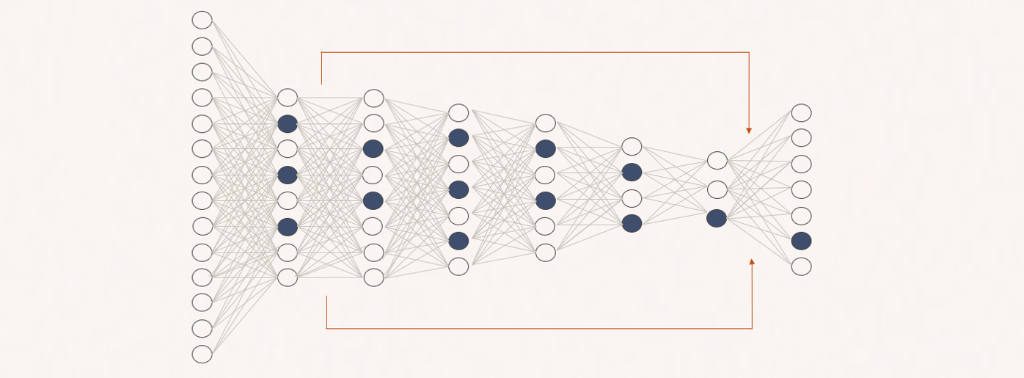
This project develops a customer-facing neural-optimization and engineering-analysis platform for evaluating multiple high-power-laser architectures against user-selected design requirements, performance objectives, and engineering constraints. The project also includes deliverable designs and test results from multiple laser architectures, with design aided by the program. The platform combines trained deep neural models with data-management, validation, visualization, and optimization workflows, allowing engineers to explore architectural alternatives and conduct design trade studies through an interactive MATLAB interface. Specific laser models, datasets, network implementations, performance requirements, and customer applications are omitted from the public description.
Research Motivation
Technical Leadership
Technical Challenges
- [01]High-dimensional and architecture-dependent design spaces
- [02]Multiple and potentially competing performance objectives
- [03]Achieving high performance while retaining model-dynamics interpretability
- [04]Data consistency across laser architectures and model configurations
- [05]Development of a usable customer-facing scientific interface, which preserves an engineer's authority while retaining interpretability and interface usability.
My Contributions
Starting from broad research objectives rather than a prescribed implementation, I developed the computational framework and translated it into a functioning engineering platform.
- —Designed, trained, evaluated, and iteratively refined deep neural networks for predicting laser performance from selected design inputs.
- —Refined optimization workflows that use trained models to explore candidate designs against user-selected performance objectives and engineering requirements.
- —Designed the software and data-management structure required to support multiple laser architectures, model configurations, inputs, outputs, and analysis workflows.
- —Built the customer-facing MATLAB App Designer interface for dataset management, network development, validation, visualization, optimization, and engineering trade studies.
- —Integrated the MATLAB App Designer interface with dynamic external models to supply additional data.
- —Developed analytical tools for examining model performance, input–output behavior, prediction error, design sensitivity, performance optimization weighted distributions, and candidate-system comparisons.
- —Co-authored the SPIE proceedings paper and solely presented the work at Photonics West 2026.
- —Independently presented my work in a customer technical briefing with the principal investigator, and currently lead its continued computational and interface development.
Mathematical & Engineering Topics
Methods & Technologies
Open Research Questions
- What are the best methods to improve neural model robustness, considering distinct laser architectures and sparsely sampled regions of design space?
- How can model confidence, sensitivity, and limitations be communicated so that engineers retain informed control over the design process?
- What physically meaningful design–performance relationships and patterns can neural networks uncover in complex laser systems?
- How should AI-assisted optimization tools balance computational efficiency, physical interpretability, and practical usability?
Future Work
Technical Reports
- —Solid-state laser design process empowered by machine learning and deep neural networks